
Analyzing the historical background and current geopolitical implications of the POK- Pakistan Occupied Kashmir conflicts.
Exploring the ongoing conflict and human rights violations in Pakistan Occupied Kashmir with a focus on the role of India.
History of the Conflict – Pakistan Occupied Kashmir
The conflict in Pakistan Occupied Kashmir dates back to the partition of India in 1947. Following the partition, Kashmir was a princely state with a predominantly Muslim population ruled by a Hindu king. Both India and Pakistan claimed sovereignty over Kashmir, leading to the first Indo-Pakistani war in 1947-1948. The war resulted in a ceasefire and the establishment of a Line of Control dividing Kashmir between India and Pakistan.
Pathan Tribesmen Invasion:
The Pathan Tribesmen invaded independent Jammu and Kashmir which led to the Indo-Pakistani War of 1947–1948. Pakistan denies playing any role in the invasion, but the shreds of evidence speak a different story.
Instrument of Accession:
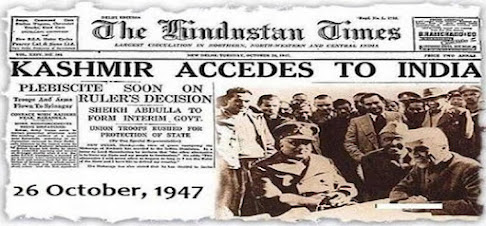
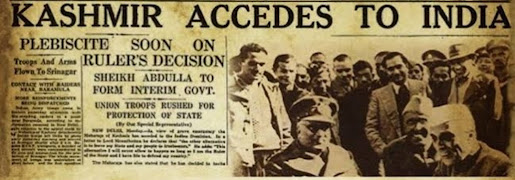
Jammu and Kashmir observes 26th October as Accession Day and is declared as a public holiday. On this day in 1947, Maharaja Hari Singh signed the Instrument of Accession with India. People celebrate the day by singing the National Anthem of India, bursting crackers and hoisting Indian Flag.
Jawaharlal Nehru and United Nation’s Involvement:
Jawaharlal Nehru, first Prime Minister of Free India, approached the United Nations to settle the PoK issue. The move is considered wrong by many as it left the dispute unresolved for a lifetime.
The United Nations intervened during the first war between India and Pakistan, which started in 1947. The U.N. took a plebiscite which demanded both the countries to put a ceasefire. However, the move left many issues unresolved and fueled the tension between India and Pakistan further. All disputes between India and Pakistan, except the war in 1971, are related to the PoK issue.
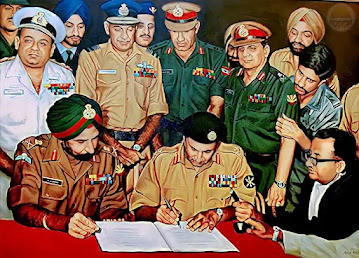
In 1965, another war broke out between India and Pakistan, with Kashmir being a major point of contention. The war ended in a ceasefire and the reaffirmation of the Line of Control.
In 1999, the conflict escalated further with the Kargil War. Pakistani forces infiltrated the Indian side of the Line of Control, leading to intense fighting between the two countries. The war ended with Indian forces successfully pushing back the Pakistani forces.
Since then, the conflict in Pakistan Occupied Kashmir has remained unresolved, with sporadic instances of violence and tensions between India and Pakistan.
The contentious region of Pakistan Occupied Kashmir (POK) has been a hotbed of human rights violations for decades, with the local population bearing the brunt of political turmoil and conflict. The impact of these violations on the lives of the people in POK cannot be overstated, as they continue to suffer from oppression, restrictions on freedom, and a lack of access to basic necessities. Despite numerous reports and calls for intervention from the international community, the situation in POK remains dire. This blog delves into the unseen reality of human rights violations in POK and examines the profound impact it has on the local population, shedding light on a crucial issue that demands global attention and action.
Geographical Insights:
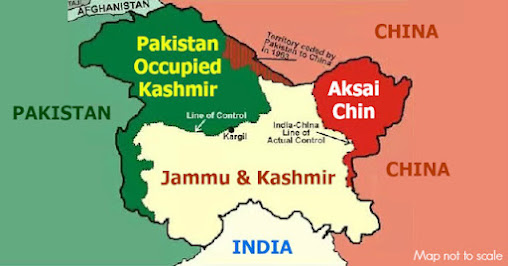
PoK is divided into two parts for administration after illegal Occupation by Pakistan ,Officially they are called Gilgit-Baltistan and Jammu and Kashmir. But locally, people call the region of India’s Jammu and Kashmir as ‘Pakistan Occupied Kashmir’ and Muzaffarabad is the capital of POK Jammu and Kashmir after illegal occupation.
Source of Income of the Residents:
A major portion of the population depends on agriculture. Wheat, maize, forestry and livestock are some sources of income for the people. Walnuts, honey, mushrooms, cherries, apples, resin, maple, medicinal herbs and plants, and burning wood are some other agricultural products in this area.
Tourism also helps earn some livelihood for some families. It is said that members of the British Mirpuri community send remittances here.

The Shaksgam Valley, a region of Raksam and Baltistan, which is a part of the PoK, was handed over to China by Pakistan in 1963. The area is also called a ceded area or Trans-Karakoram Tract.
Human Rights Violations in Pakistan Occupied Kashmir
Human rights violations in Pakistan Occupied Kashmir have been a matter of concern for many international organizations and human rights activists. There have been reports of enforced disappearances, arbitrary detentions, torture, and extrajudicial killings by the Pakistani authorities.

Freedom of expression and peaceful assembly are also severely restricted in the region. Journalists, activists, and political opponents are often targeted for expressing dissenting views or advocating for self-determination.
Minorities, including Hindus and Sikhs, face discrimination and persecution. Their religious places have been vandalized and they are often subjected to forced conversions and abductions.
The lack of accountability and transparency in the region further exacerbates the human rights situation, with perpetrators of human rights abuses going unpunished.
Impact on the local population:
The pervasive human rights violations in Pakistan Occupied Kashmir have left a lasting impact on the local population. Families have been torn apart, individuals have lived in constant fear, and communities have been fractured by the relentless oppression. The trauma inflicted by years of systematic abuse reverberates through every aspect of life in POK, casting a dark shadow over the hopes and aspirations of its people. The emotional toll of repression and the stifling of voices clamoring for justice have created a culture of silence and submission. As we delve deeper into the impact on the local population, it becomes evident that the scars of human rights violations run deep, shaping the collective psyche of a community battered by injustice.

International Response and Involvement
Lack of international attention and response:
Despite the grave human rights violations occurring in Pakistan Occupied Kashmir, there has been a concerning lack of international attention and response to address these atrocities. The global community’s silence on the plight of the local population in POK not only perpetuates the cycle of abuse and impunity but also sets a dangerous precedent for the disregard of basic human rights. The absence of significant diplomatic pressure or actions against the perpetrators of these violations adds to the sense of abandonment felt by the victims. It is imperative for the international community to step up, acknowledge the grim reality in POK, and take concrete steps towards ensuring accountability and justice for those oppressed under the shadow of human rights abuses.
Calls for accountability and justice:
The alarming situation in Pakistan Occupied Kashmir demands an urgent call for accountability and justice. The victims of human rights violations in POK are in dire need of recognition and support from the global community. It is time for world leaders and human rights organizations to amplify their voices, demand investigations into these atrocities, and hold the perpetrators accountable for their actions. Without accountability, there can be no justice, and without justice, the cycle of abuse will continue unabated. It is crucial for the international community to prioritize the protection of the basic human rights of all individuals, regardless of their geographical location, and work towards ending the suffering of the marginalized population in Pakistan Occupied Kashmir.

The international community has raised concerns about the human rights situation in Pakistan Occupied Kashmir. Various organizations, including the United Nations and Amnesty International, have documented human rights abuses and called for an independent investigation into the violations.
India has consistently highlighted the human rights violations in Pakistan Occupied Kashmir on international platforms. It has urged the international community to take action against the perpetrators and ensure the protection of human rights in the region.
However, Pakistan denies the allegations of human rights abuses and maintains that it is providing security and development to the people of Pakistan Occupied Kashmir.
India’s Role in the Conflict
India plays a significant role in the conflict in Pakistan Occupied Kashmir. It considers the region as an integral part of its territory and has consistently opposed the Pakistani occupation.
India has raised the issue of Pakistan Occupied Kashmir at various international forums, highlighting the human rights violations and advocating for the rights of the people living in the region.
India has also supported the aspirations of the people of Pakistan Occupied Kashmir for self-determination and has emphasized the need for a peaceful resolution of the conflict through dialogue and diplomatic means .
Furthermore, India has taken steps to improve the socio-economic conditions in its part of Kashmir, with a focus on development and infrastructure projects that benefit the local population.
Potential Solutions and Future Outlook
Supporting local initiatives for human rights:
One way to make a tangible impact in addressing human rights violations in Pakistan Occupied Kashmir is by supporting local initiatives that strive to promote and protect human rights within the region. By empowering grassroots movements and local organizations, we can amplify the voices of those directly affected by these violations and enable them to advocate for their rights effectively. Providing funding, resources, and visibility to these initiatives can help drive meaningful change at the grassroots level and create a network of support for those fighting for justice and accountability. It is crucial for us to stand in solidarity with the brave individuals working on the ground to uphold human rights in POK and contribute to a future where all individuals are treated with dignity and respect.

The urgent need for action
In conclusion, the pervasive human rights violations in Pakistan Occupied Kashmir demand immediate attention and action from the global community. By rallying behind local initiatives and supporting grassroots movements, we can pave the way for substantial change and ensure that the voices of the oppressed are heard. It is crucial for us to advocate for justice, accountability, and the protection of human rights in POK. Let us stand united in solidarity with those striving for a future where every individual is treated with dignity and respect. The time to act is now, and together we can make a difference in bringing about a more just and humane society in POK.
Finding a lasting solution to the conflict in Pakistan Occupied Kashmir is a complex and challenging task. It requires a comprehensive approach that addresses the political, social, and economic dimensions of the conflict.
Additionally, efforts should be made to improve the human rights situation in the region, with a focus on ending impunity for human rights abuses and ensuring accountability for the perpetrators.
The international community has a crucial role to play in promoting peace and stability in Pakistan Occupied Kashmir. By putting pressure on the parties involved and supporting initiatives for dialogue and reconciliation, a peaceful resolution to the conflict can be achieved.
The empowerment of the people of Pakistan Occupied Kashmir to decide their own future.
https://peacekeeping.un.org/mission/past/unipombackgr.html
https://www.wionews.com/south-asia/pakistans-rare-admission-says-pok-is-foreign-territory-727770
Follow for More …!
Jai Hind !